
How Sonoma County Residents Are Found
Matching the source to the question saves hours. A Sonoma County residents directory search moves quickly when the first record fits the ask. An address points to parcel rolls and permit records. A name could fit a court party listing instead. It might also match a business filing. Or it fits a professional license, or a self-service voter status check. Family history often starts with obituaries, census pages, or probate indexes. Every source means something different. So treat one hit as a lead until a second independent record agrees with it.
- Choose whether the starting key is a name, address, parcel, case, business, or historical year.
- Use the official Sonoma County or California index that accepts that key.
- Record the date, document number, APN, case number, or other stable reference shown by the result.
- Move to the custodian, counter, archive, or request channel when the web result is partial.
- Compare two records before treating a person, household, or past occupant as the same individual.
Narrowing a resident directory question means finding the record with a clear custodian. A deed names the parties to one instrument. An assessment roll describes a parcel. A city directory names an occupant for a single publication year. None of them is a complete household list. Used together, though, each layer adds something the others lack.
The Offices Behind Sonoma County Records
Most current Sonoma County resident-record work passes through a small cluster of Santa Rosa offices, even though the records stay separate. The Clerk-Recorder indexes deeds and filings. The Assessor ties an APN to a situs, parcel characteristics, and assessed values. The Registrar of Voters handles voter-file requests. Its authenticated status service covers the self-service side. The county's combined Clerk-Recorder-Assessor hub is the best starting point for office routing, though each portal sets its own access limits.
Clerk-Recorder, Recorder Division
585 Fiscal Drive, Room 103
Santa Rosa, CA 95403
707-565-3800
Sonoma Web Service index
Sonoma County Assessor
585 Fiscal Drive, Room 104F
Santa Rosa, CA 95403
707-565-1888
Property Information search
Registrar of Voters
435 Fiscal Drive
Santa Rosa, CA 95403
707-565-6800
California My Voter Status
The Clerk-Recorder keeps regular counter hours Monday, Tuesday, Thursday, and Friday from 8 to 5, and Wednesday from 8 to 4. No-fee work stops during the last half hour. Document processing pauses then as well. Phone help runs Monday through Friday from 9 to 4, and the county posts a 24-hour information line at 707-565-3700.
The service page adds context no search box gives. A missing online name is not a dead end. The right next move may be a counter index, a copy request, or a narrowly described California Public Records Act request to the custodian.
The county hub supplies the office map for a Sonoma County residents directory trail, and the record type decides which desk can answer follow-ups. The Sonoma County Clerk-Recorder-Assessor hub shows how recorder, clerk, and assessor services share one public campus. That grouping saves steps. It does not merge the records themselves.
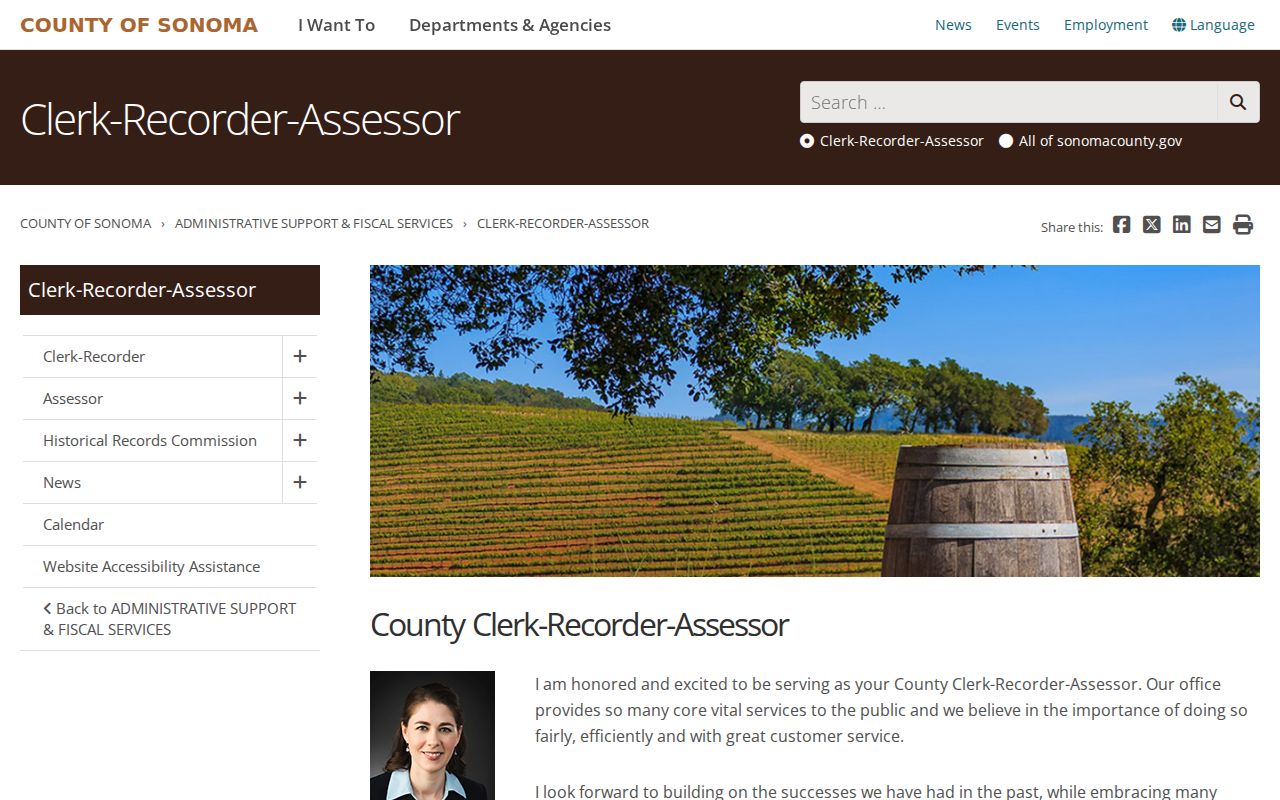
The hub page shows a routing point rather than one combined resident roll. Follow each record to the division that keeps it.
Choose a Sonoma County Record
The same person can surface in several Sonoma County records playing very different roles. A grantor may sell land without ever living at the situs. A business agent may list an office address. A court party need not live nearby. A directory head counts as an occupant only for the year printed, while an assessment name reflects a tax relationship. Let the record's purpose drive the search terms. Hoping one source answers everything just adds errors.
- Roll
- A custodian's organized list, such as an assessment or voter record, with rules about what may be viewed.
- Index
- A finding aid that points to a document, case, filing, or event; it is not always the underlying record.
- Parcel
- A mapped unit of land identified in Sonoma County by an APN and connected to a situs and legal description.
- Criss-cross directory
- A historical directory section arranged by street or address, often showing an occupant for a publication year.
Family and estate questions call for sources that show relationships, such as probate petitions, obituaries, vital indexes, or directory entries. Property questions start with the parcel. Stabilize the APN before touching a deed or permit. For a current status question, use the official self-service tool or ask the responsible office what lawful access remains. That order keeps a directory search honest.
Start a Sonoma County Address Search
Every address search starts with the physical location, the situs, and then moves to the APN. The Sonoma County Property Information portal is APN-oriented. The county's Parcel and Property Hub adds map context. Together they anchor the land itself. Nearby polygons and map layers round it out, giving a stable land key before any deed, permit, or historical source gets checked.
| Search control | What it contributes |
|---|---|
| Address or location | Starts with a situs; units and directional terms can matter. |
| APN | Uses Sonoma's three-part format, such as XXX-XXX-XXX; the ArcGIS field includes the hyphens. |
| Map click | Selects a parcel polygon and keeps adjacent parcels visible. |
| Layers and legend | Adds streets, places, buildings, city limits, county boundaries, and jurisdiction context where available. |
| Search, clear, identify | Supports map discovery; the underlying service also supports query and find tools. |
Keep the APN, situs, current document number, and legal description together in one place. Map layers are general-reference geometry, not surveys. An APN is an assessment key, while a deed's lot, block, subdivision, or metes-and-bounds description identifies the land in legal terms. Those keys outlast any mailing change.
Sonoma County Parcel Map Limits
The Sonoma County parcel map excels at describing land. It falls short on names. The public GIS layer may omit owner-name attributes. Its own description says so. Yet it can still return an APN, parcel shape, situs, and property details. Updates arrive monthly from about 6,000 assessor map pages. A single query stops at 2,000 records. Treat the map as a discovery tool rather than a deed image or a survey-grade boundary.
California Revenue and Taxation Code section 408 shapes what assessor information can be published. A fuller lawful roll often means a visit to the Assessor's office. The county takes questions about its information product at 707-565-1888. A missing name is not proof that no ownership record exists. Carry the APN and the current document reference to the Recorder instead.
Mailing and situs addresses diverge, too. A tax mailing line might be a post office box. It might be another Sonoma County address, an out-of-county address, or an agent's address. That line is evidence, not proof of residency. Keeping the distinction straight is what keeps a Sonoma County residents directory trail honest.
Current Sonoma County Resident Directories
No single list covers everyone. Current Sonoma County sources behave as separate resident directories, each answering a different slice of a question. One yields a parcel lead. Another produces a recorded document, a voter-status result, a court party, or a historical collection. Expect a second check to finish most lookups.
| Source | What it can show | Keeper | Access |
|---|---|---|---|
| Property Information / parcel roll | APN, situs, characteristics, values, and some lawful roll fields | Sonoma County Assessor | Public web fields, fuller office channel |
| Sonoma Web Service | Grantor, grantee, filing role, date, type, and document reference | Recorder Division | Free index; copies follow office rules |
| My Voter Status | An individual's registration status and election information | California Secretary of State | Authenticated personal lookup |
| Odyssey Case Portal | Case party, category, status, and register information where shown | Sonoma Superior Court | Remote rules vary by case type |
| Directories and local indexes | Historical occupants, households, businesses, or relationships | Sonoma County Library and partners | Digital scans, catalog, or on-site help |
For a specific record question, an official roll usually beats a compiled resident directory. A commercial compilation may stitch together mixed-age data, while the custodian can explain the date, the field, and the legal purpose behind any result. Before trusting a name, compare the source, its update point, and its record key.
| Official source | Compiled result | Safer reading |
|---|---|---|
| Named custodian and record type | Mixed sources with unclear dates | Trace the claim to its originating office |
| APN, case, document, or filing reference | Person and address pairing without a stable key | Use a second independent anchor |
| Access limits stated by law | May flatten privacy and confidentiality rules | Stop when the custodian says a field is closed |
Sonoma County Court Party Searches
Start with the Sonoma Superior Court Odyssey Case Portal for a named party. California offers no single open statewide party search across every superior court. Odyssey's Smart Search takes a case number or a party or business name. Advanced filtering narrows by category or location. Detail varies with case type. A public result may show a caption, case number, filing date, party role, status, register of actions, or hearing date. Remote display never promises every document.
California Rules of Court rule 2.503, along with confidentiality rules, caps what appears online. Juvenile, sealed, protected, adoption, and many parentage records follow a different path. The court's Records Department also holds older civil, family, and probate files. Those files reach into the mid-1800s. A pre-1984 file may call for an archive request with a party name and year. That is no casual web search.
The Sonoma Superior Court records page lays out the local route. It connects a person to a case category without turning a result into a biography.
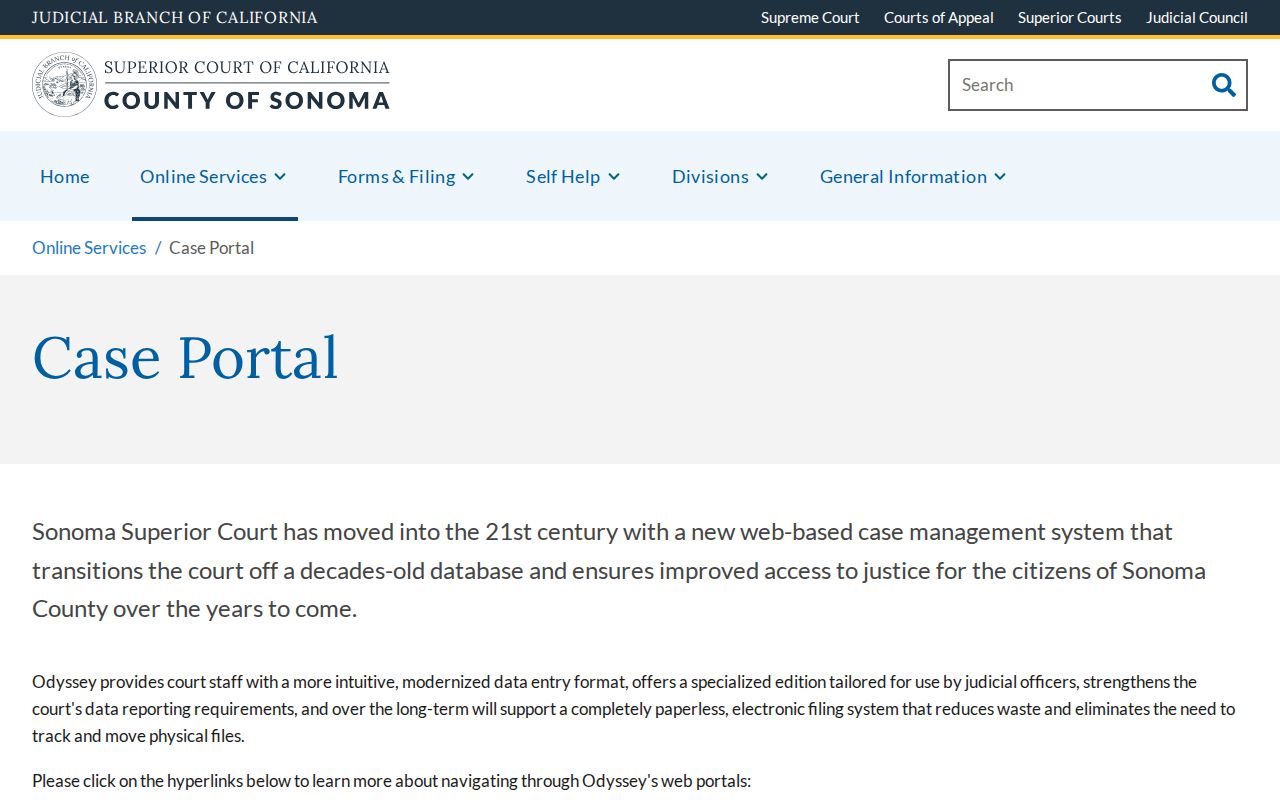
Anchor the next step with a case number and party role. A court record can confirm a legal proceeding. Identity and address questions belong to a parcel, vital, or directory source instead.
Sonoma County Voter Status Limits
California My Voter Status verifies one voter at a time. It is not a public by-name or by-street resident directory. The tool asks for a first name, last name, date of birth. When required, it also wants a California driver license or ID number or the last four digits of a Social Security number. Selecting Sonoma may return registration status, party preference, polling information, or election materials for the authenticated voter. Typing a street and getting a neighbor list is not something it does.
Elections Code sections 2180 through 2194 govern voter information. The affidavit, signature, full birth date, license or ID number, and Social Security number all stay protected. Qualified voter-file access carries a permitted-purpose and use-limit framework. Safe at Home or other protected voters may be absent from a block search. Participation history tells whether a person voted, never how.
The California voter-status form shows why a personal lookup and a public resident directory are two different tools.
Bring voter-file questions to the Registrar of Voters with a stated lawful purpose, geography, and requested fields. A self-lookup should stay a self-lookup.
Sonoma County Vital Record Events
The Sonoma County Clerk-Recorder handles birth, death, and marriage certificates for events that happened in the county. The state health department offers a second ordering channel. Coverage runs deep. County birth records begin October 14, 1855. A new birth usually reaches the county index about a month after the event. Remember one limit. The county cannot issue a certificate for an event that occurred elsewhere. So a residents directory built on vital records must start with the right county.
California draws a firm line between authorized certified copies and informational copies. The line sits under Health and Safety Code sections 103526 and 103526.5. A mailed authorized birth request needs a sworn statement, notarized as required. Confidential marriage records sit under Family Code section 509. For 2026, CDPH lists fees of $31 for birth, $26 for death, $19 for marriage, and $18 for dissolution. Current search-fee rules appear on the live state forms. A CDPH dissolution certificate is only that. It is not the full court decree.
Library indexes help when a certified copy is the wrong tool. Historical birth, marriage, death, cemetery, obituary, probate, and directory indexes there suit family history work. That work often traces past residents of Sonoma County. Note: pair any event record with a date, a place, and a second source before using it to identify a resident.
Sonoma County Business and License Trails
Business and license records can add a public role to a resident lookup. They work alongside the Sonoma County residents directory as one more public trail. The California Secretary of State bizfile Business Search takes an entity name or number. It also offers contains or starts-with modes, entity type, status, and an initial filing date range. Results may show formation or registration date. They may also show current status, agent, mailing address, and a Statement of Information due date. A Sonoma fictitious business name filing works differently. It ties a trade name to registrant names, a business address, expiration data, and a statement number.
The California Department of Consumer Affairs license search opens paths by board, license type, and license number. It also searches by business name, first or last name, and location. A professional result may show status, issue or expiration data, and published discipline. Treat every business address with care. A business, agent, practice, or licensed-premises address serves a filing purpose. It is not proof of where a person lives. California bizfile Business Search shows the entity side of a local records trail in Sonoma County.
For a licensed professional, the state board remains the custodian. It can explain status fields and correction paths. The California license-search portal is a separate source for credentials and public status.
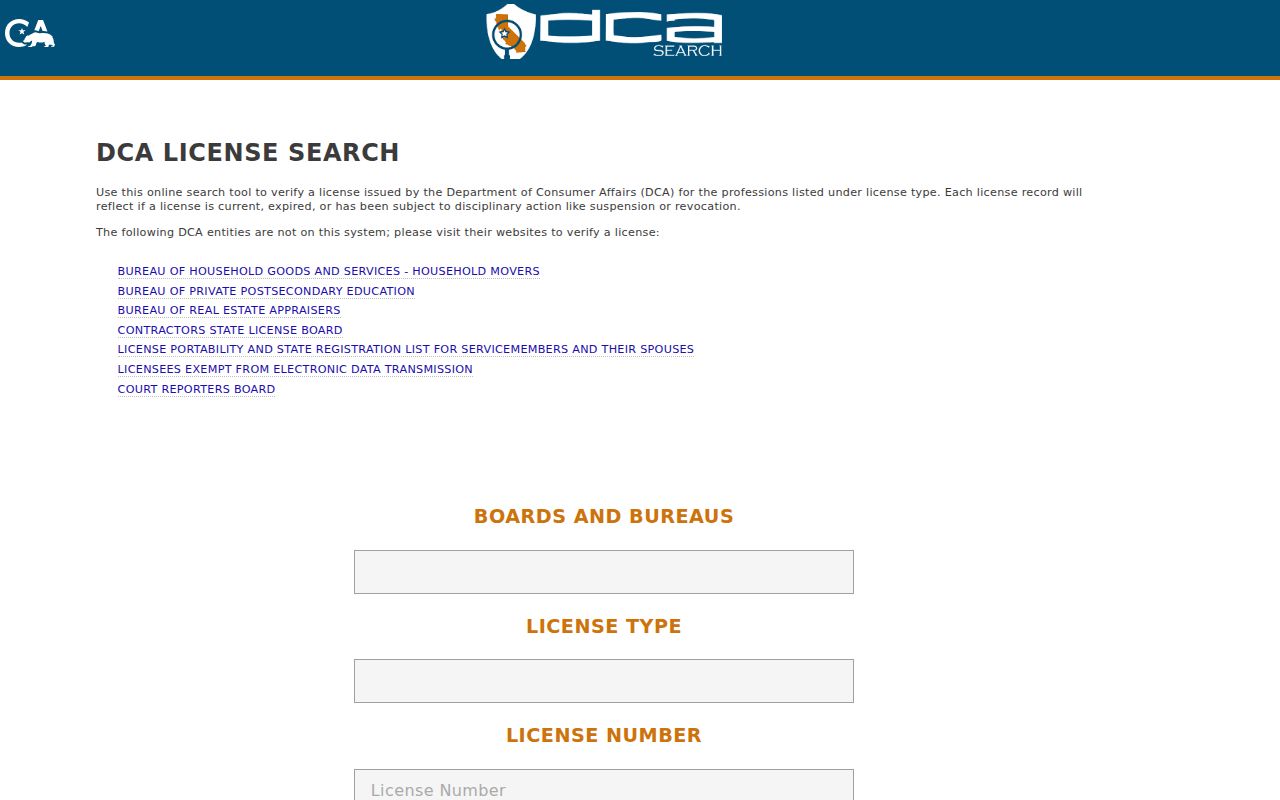
Joining entity, FBN, license, and parcel references can clarify a resident's public role. Still, each address must keep its original meaning in the record trail.
Sonoma County Custody Lookups
The Sonoma County Sheriff inmate search and the California state incarcerated-person search are narrow record sources. Neither is a general Sonoma County residents directory. A custody result describes a booking or custody status under the agency's own rules. It does not prove a current home, a past address, or an identity match outside the record. Incident, victim, juvenile, medical, investigative, and safety details may be withheld or redacted.
Direct report requests to the agency that created the record. A California Public Records Act request must name an identifiable existing record. Staff cannot be asked to build a new list. The same name can surface in a jail or court result without being the person you seek. Weigh the case number, date, and other public context. The Sonoma Sheriff inmate search screen is one example of a limited, agency-specific lookup.
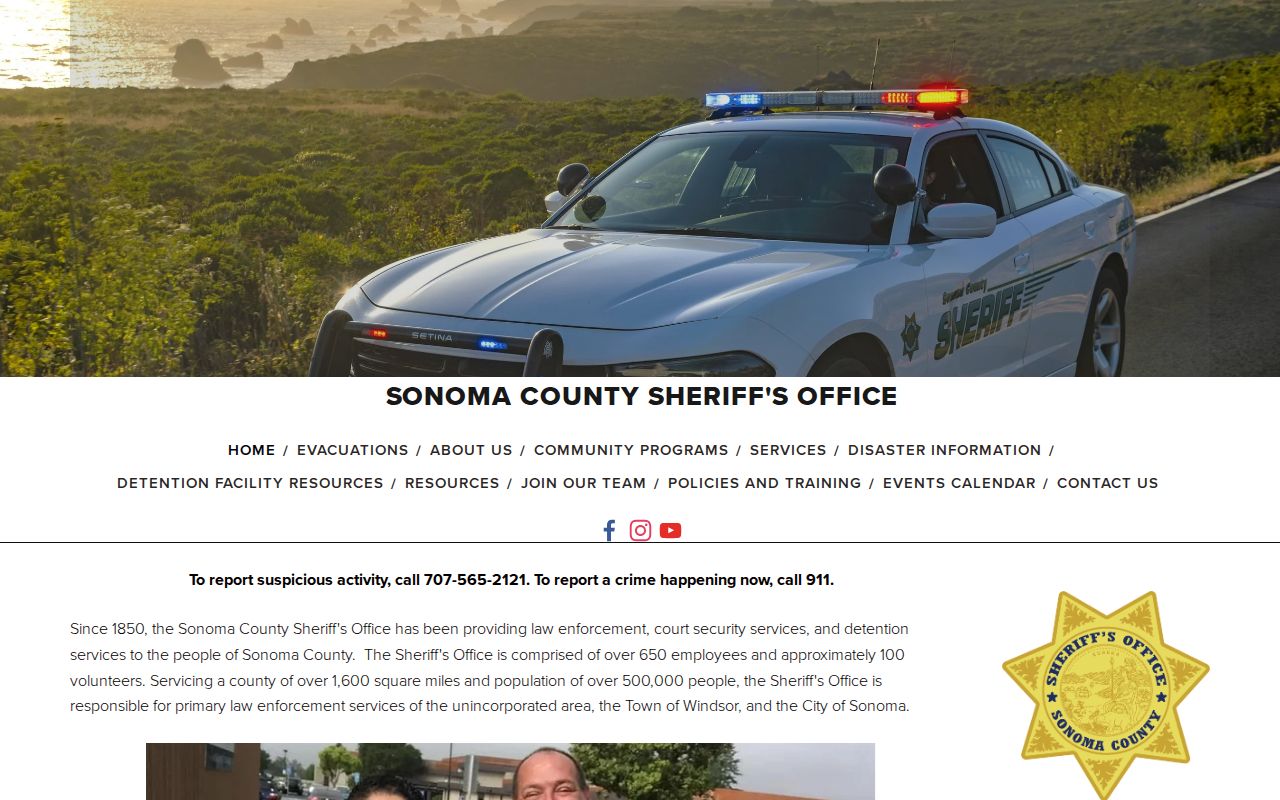
A custody result belongs in a carefully labeled record trail. It should never serve as a shortcut to a claim about where someone lives.
Historical Sonoma County Resident Directories
Historical Sonoma County residents directory work runs strongest through the local library. The Sonoma County Directories collection reaches from the 1870s into the early 1950s. It covers telephone, business, farmer, and excerpted city sections. Named volumes include the California State Farmers Directory for Sonoma County, 1922 to 1923. A Petaluma, Cotati, and Penngrove A to Z directory for 1954 to 1955 is also named. A reverse section can turn an old address into an occupant. Its answer is tied to the publication year.
Printed runs vary by community and repository. A historical name pairs well with a census, newspaper, obituary, map, or probate index. Rural routes and old locality names often stand in for a modern numbered street. For that reason, a past resident trail needs the town or route, the edition year, and the volume's abbreviation key. Find who lives on a street in Sonoma County by starting with the Sonoma County directory book page. It explains the full collection and reading method.
Sonoma County Library History Shelf
A web index can run dry. The Sonoma County History and Genealogy Library is the place to turn then. Its holdings include city and telephone directories, yearbooks, censuses, and voter registrations. Tax assessments and cemetery guides join them. So do indexes to births, marriages, deaths, wills, probate, court, and naturalization records. Digital access varies by collection and authentication. Archive materials marked Offsite should be requested ahead of a visit.
The local history layer helps with a former classmate or an heir. It can also trace the story of a family house. Staff can spot an OCR miss. The County Archives are managed through the library. The Petaluma History Room and the Sonoma County Wine Library add family, business, and community material. Local historical societies round out the holdings. These remain named collections, not open rosters of living members.
Use the library when a residents directory question becomes a family-history or old-address question. Then return to the custodian for anything current.
Sonoma County Records Through Time
Sonoma County's paper trail explains why a lookup can show a gap yet still hold an answer. The county was among California's original 27 in 1850. Even so, the Historical Records Commission's Recorder inventory reaches back to 1834 for earlier land-era material. The county seat shifted from Sonoma toward Santa Rosa in 1854. Early entries may therefore sit under older place names. Today's counter and archives are in Santa Rosa regardless.
- 1834: the Recorder inventory begins its historical roadmap before statehood.
- 1850s: county administration and early census and land records form the first American-era layer.
- 1906: the Santa Rosa earthquake damaged the courthouse, but it is unsafe to say all county records burned.
- 1965 and 1967: the library's archival mandate and California Room helped shape today's local-history service.
- Modern access: electronic indexes, scans, counter books, microfilm, and archives now overlap.
The result is a layered Sonoma County residents directory. A missing online hit is not a verdict. Check a custodian, the library, an archive, or a records request before concluding a person or parcel never appears.
Sonoma County Privacy Boundaries
California privacy rules create lawful stopping points. Safe at Home substitutes a mailing address for eligible protected participants. Elections Code section 2194 restricts voter data use and republication. The Driver's Privacy Protection Act closes general DMV address access. Court, vital, juvenile, adoption, medical, and investigative files may each carry a specific confidentiality rule. A sound Sonoma County residents directory says what a source proves. It leaves closed fields closed.
The CCPA, as amended by the CPRA, gives covered residents rights to know, delete, correct, and opt out of sale or sharing. Residents can also limit sensitive-information use and receive nondiscriminatory treatment, subject to exceptions. The California Privacy Protection Agency explains the DROP process. A verified deletion request began in January 2026. Broker retrieval at least every 45 days starts August 1, 2026. But a broker deletion leaves the originals alone. A deed, assessment, court file, or archive record stays with its custodian.
The California's data-broker privacy portal makes the split visible. A private copy is not the public record.
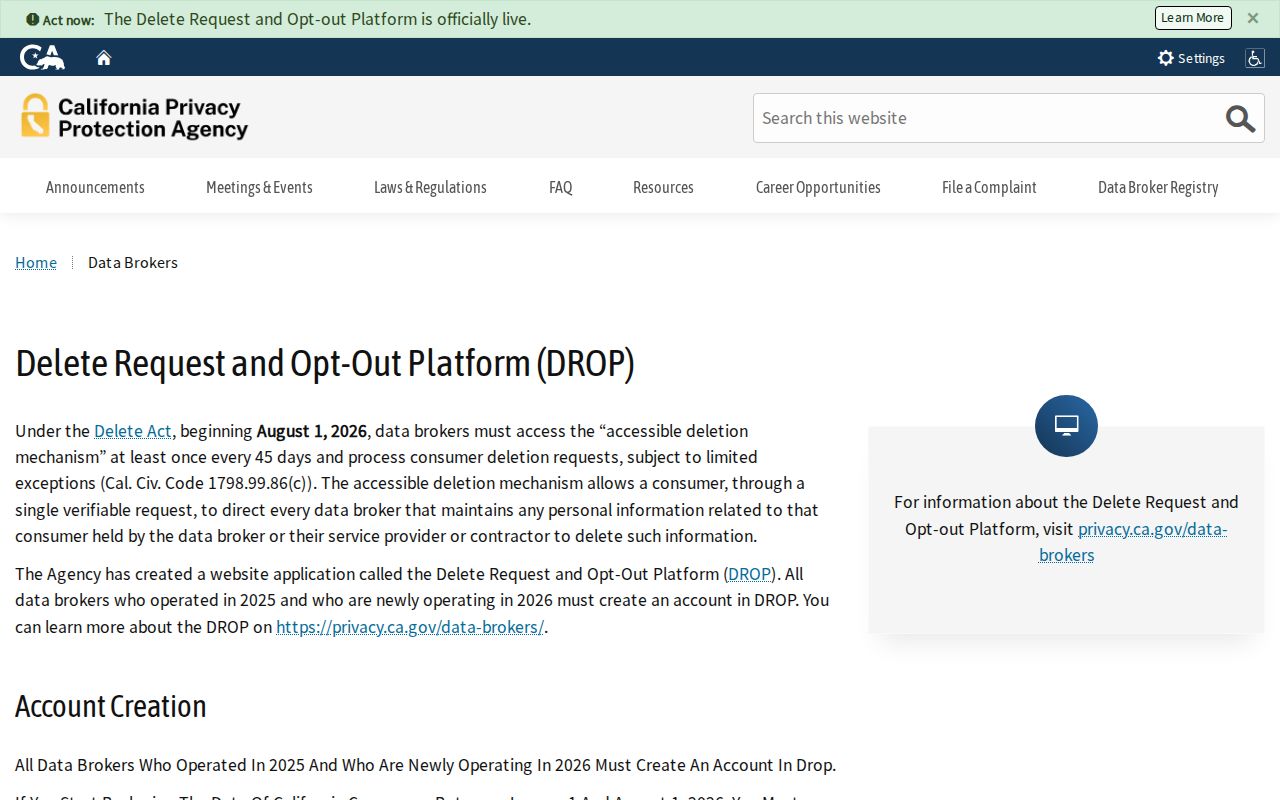
Use public records for lawful, decent purposes. Family history, civic understanding, property curiosity, and personal needs qualify, but never use a name or address to stalk, harass, intimidate, or harm anyone.
Lawful use. A public record is not permission for surveillance or repeated unwanted contact. California Penal Code sections 646.9, 422, and 653m, along with civil harassment law, set serious limits on misuse.