
Sonoma County City Directory Shelves
The Sonoma County collection is a set of local runs, not an exhaustive Polk sequence. Digitized material spans the 1870s into the early 1950s overall, with telephone, business, farm, and selected city sections mixed together. The named volumes below are useful anchors because they identify both a place and a publication purpose. A missing year can reflect a gap in surviving copies, a different repository, a changed title, or a volume that has not been digitized.
| Collection | Years | Where Held | Access |
|---|---|---|---|
| Sonoma County directories | 1870s to early 1950s overall | County Library digital collections and local rooms | Free scans where available; browse gaps through staff |
| California State Farmers Directory, Sonoma County | 1922-1923 | Digitized Sonoma County directory collection | Online scan and OCR finding aid |
| Petaluma, Cotati and Penngrove A to Z Directory | 1954-1955 | Digital collection and Petaluma local history holdings | Browse the named volume; scope is local |
| McKenney's eight-county directory | 1884-1885 | History and Genealogy Library; reprinted in Sonoma Searcher | Consult the local shelf or Sonoma Searcher index |
| Print city and telephone runs | Select local years | History and Genealogy Library and Petaluma History Room | Catalog and staff check; no continuous run promised |
The collection includes California State Farmers Directory for Sonoma County, 1922-23, and the Petaluma, Cotati and Penngrove A to Z Directory, 1954-55. The older McKenney's item covers eight counties, so a hit in it must be read against its section heading and locality. It is not evidence that every Sonoma community appears in every year.
Sonoma County City Directory Scans
The digitized collection is a good first stop for a surname, business, or place. Its viewer supports collection browse and item scans, but OCR should be treated as a finding aid. Decorative type, damaged pages, initials, and small rural entries can defeat text search. Search a surname, then browse the surname page and its neighbors. Check the title page, locality heading, publication year, and page number before copying a line into family notes.
Originals mostly come from the History and Genealogy Library and the Petaluma History Room, with some contributions from the Petaluma Historical Library and Museum. The Sonoma County Directories collection is free where a scan is present, while physical gaps route back to the catalog and staff. That split explains why a search result can point to a volume without proving that the whole shelf is online.
The digitized pages are particularly useful for comparing how a town was named in different years. A route, post office, or community section may preserve a place identity that a modern street search does not recognize.
The digitized Sonoma County directory collection shows the page-level format that makes a historical directory useful for local research.
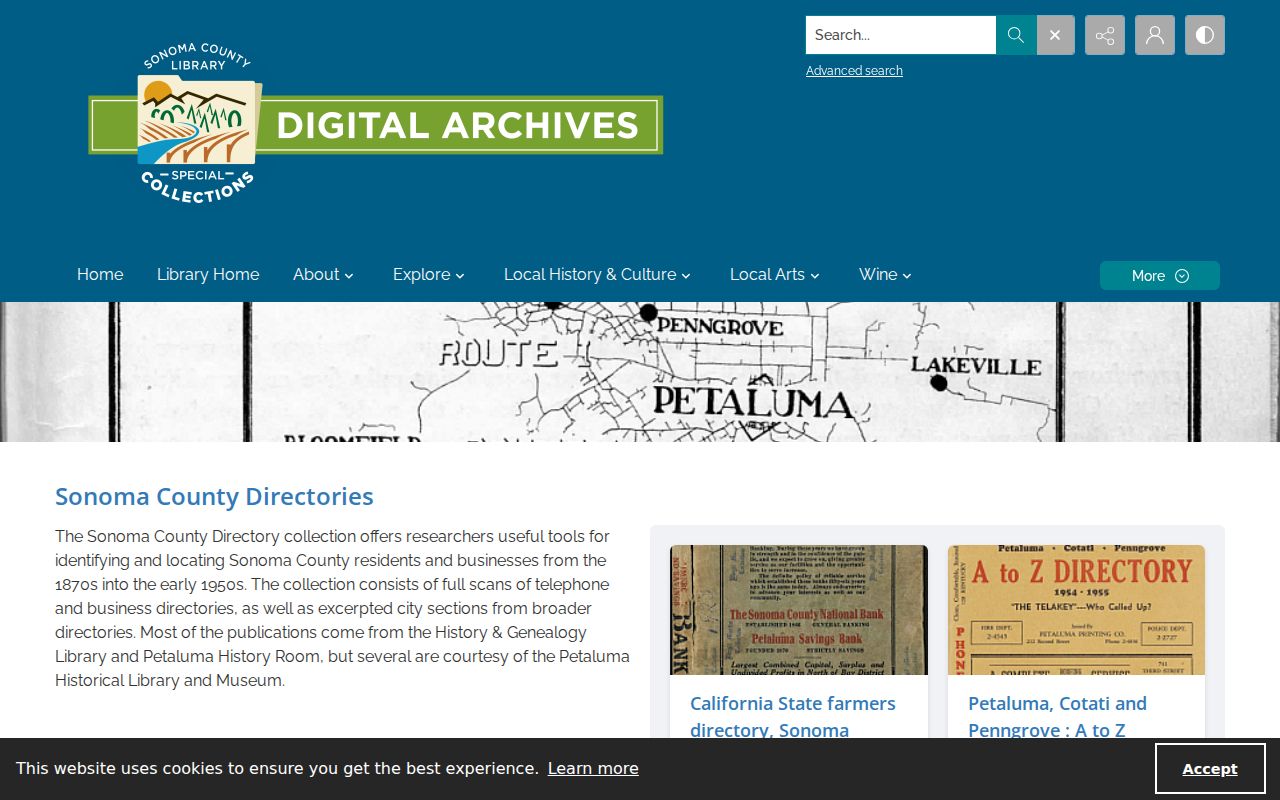
A scan can preserve the type, headings, and page order needed to check an OCR hit against the original print.
Reading Sonoma County City Directory Entries
A directory entry is a compact set of clues. Transcribe it literally before interpreting it. The surname and given initials identify the line as printed. A spouse may appear in parentheses. Occupation or employer wording belongs to the historical description of the entry, not to a present-day identity claim. Residence, route, post office, and business address can point to different places. A widow notation can explain why a name changes between editions.
| Entry field | What to record |
|---|---|
| Surname and initials | Copy the spelling and initials exactly, including a middle initial or compound surname. |
| Spouse | Note a spouse in parentheses or a cross-reference when the volume uses one. |
| Occupation or employer | Preserve the volume's wording as a time-stamped clue to role and affiliation. |
| Residence or rural route | Record house number, street, route, locality, and post office as separate fields. |
| Business address and phone | Keep a business line apart from the residence line and copy the exchange or number if printed. |
| Widow notation | Record a “wid” mark only as the volume defines it, then compare the next edition. |
| Locality, page, and year | Save the town or section heading, page number, publication year, and edition title. |
- Criss-cross directory
- A street or address-order section that lets a researcher move from a place to a named occupant.
- Householder index
- An alphabetical or household-focused index that may gather heads of household rather than every person.
- Abbreviation key
- The volume-defined legend for short marks such as r, h, or wid; check it before expanding any symbol.
Sonoma County City Directory Library
The History and Genealogy Library at 725 Third Street in Santa Rosa is the main local fallback when a city directory is not digitized. Posted hours are Tuesday through Saturday, 11 to 5. The room has four public computers, two digital microfilm readers, scanners, and staff who can help locate a cataloged run or related index. The collections include city and telephone directories, yearbooks, censuses, voter registrations, tax assessments, cemetery guides, and indexes for births, marriages, deaths, wills, probate, courts, and naturalizations.
Access rules for electronic databases can differ between in-library and remote use. Ask for the volume by title, community, and year. If a catalog record says Offsite, plan for an advance request rather than expecting same-day retrieval. That small check often saves a trip and also reveals whether a gap is a missing scan or an unprocessed physical item.
The History and Genealogy Library connects a city directory to other evidence without turning a single entry into a full biography.
Microfilm readers and staff at the History and Genealogy Library help when print pages, local indexes, or newspaper references do not appear in the public viewer.
Sonoma County City Directory Archives
The Sonoma County Archives are managed through the library and exceed 5,000 cubic feet. Most holdings are not digitized. Roughly 95 percent of county government record groups have at least brief catalog or Online Archive of California representation, but a finding aid is not the same as a scanned file. Offsite items need advance request. The archive can hold government, family, organization, and city material that helps explain a directory entry, yet it is not a complete living-person roster.
The Sonoma County Archives access page is the right starting point for custody and retrieval questions. Ask for a named collection, date, locality, or record series. The 1965 designation of the library as the county's official archives and the 1967 California Room opening are part of the local reason that directories, maps, and civic papers now sit in one research network.
The Sonoma County Archives access page illustrates the difference between a catalog trail and a digitized page.
Archive metadata can identify the next custodian even when the item itself must be requested in advance.
Sonoma County City Directory Timeline
A short timeline helps keep the volumes in proportion. It shows why a researcher should call a run “available” rather than “complete” unless the catalog and staff confirm every year.
- 1870s: digitized Sonoma County directory examples begin, with county, business, telephone, and selected city coverage developing in different runs.
- 1884-1885: McKenney's eight-county directory supplies a regional snapshot and was later reprinted in Sonoma Searcher.
- 1909-1910: California Polk-Husted's Santa Rosa, Petaluma and Sonoma County Directory is a named local title in the chronology.
- 1921 through the 1930s: Pacific Telephone and Telegraph volumes use Sonoma, Lake, and Mendocino sections whose locality headings must be checked.
- 1922-1923: the California State Farmers Directory for Sonoma County records a different rural and agricultural slice.
- 1954-1955: the Petaluma, Cotati and Penngrove A to Z Directory shows a named southern-county run rather than a countywide final edition.
Those layers are not interchangeable. A telephone book, farmer directory, resident list, and A to Z town book can use different inclusion rules. An absence from one edition is therefore a research question, not proof that a person or business was absent from Sonoma County.
Using Sonoma County City Directories
For family history, follow a household across editions rather than treating one line as a final answer. The latest public federal census is 1950 under the 72-year release rule as of 2026. Pair a directory year with the nearest available census, then add newspapers, obituaries, vital indexes, probate, and Sanborn or other historical maps. Each layer answers a different question: the directory may show a named occupant, the census a household, the newspaper a move or death, and probate an estate relationship.
- Transcribe the name, locality, address, route, page, and edition year exactly as printed.
- Check the preceding and following available volume, including a reverse or street section when the book has one.
- Pair the directory date with the 1950 census or another released census schedule, using the enumeration district and street clues.
- Search newspaper and obituary indexes for a move, marriage, death, business change, or family relationship.
- Use Sanborn maps, assessor material, and permits to test whether the street number or structure changed before calling two entries the same place.
A first or last appearance narrows a timeline but does not prove arrival or departure. Canvasses skip people, editions omit rural routes, and a widow notation may shift a household line without a move. When a modern identity needs checking, the Sonoma County resident lookup workflow can compare independent public records without making the historical directory do work it was never designed to do.
The Sonoma Digital platform also brings together local images, newspapers, indexes, and collection guides that can fill the space between two printed editions. The California Digital Newspaper Collection can supply newspaper pages when a directory edition leaves a gap in the household timeline.
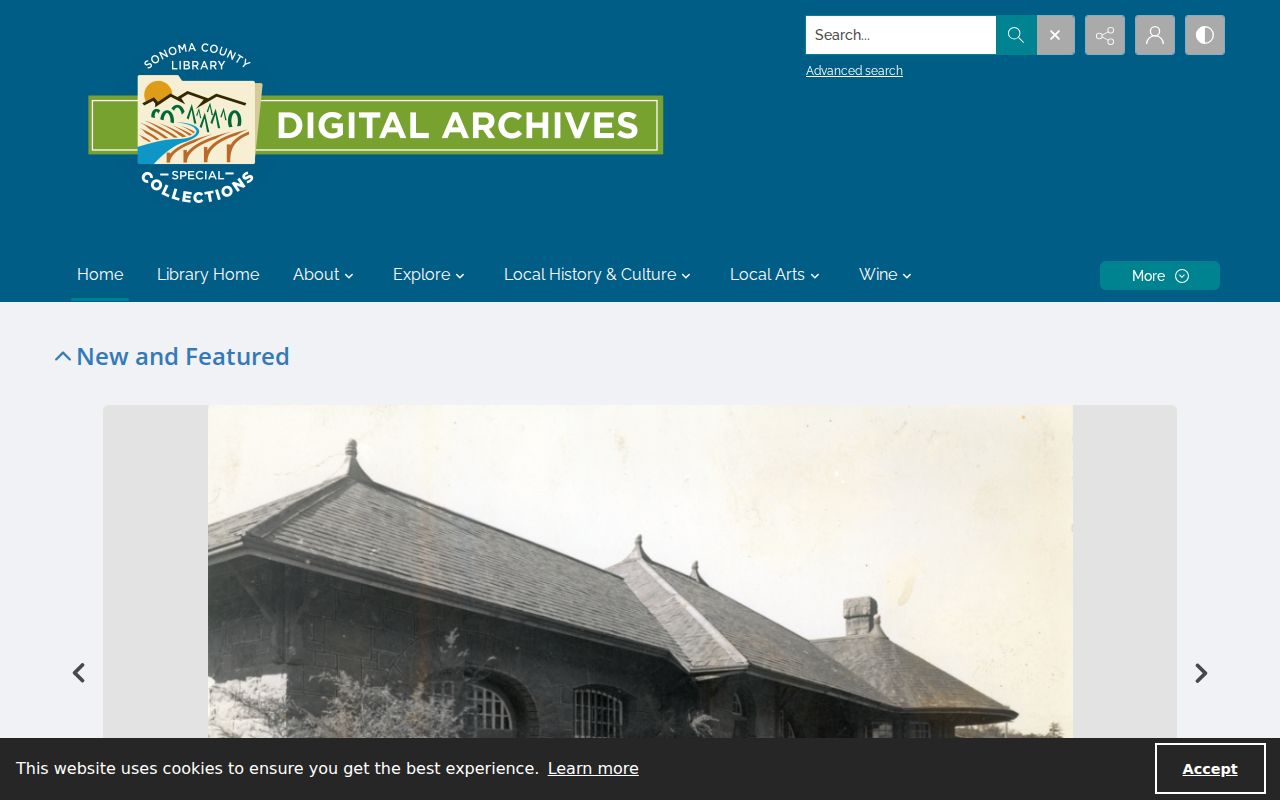
Digital context helps link a directory page to maps, photographs, and local-history references while keeping the publication year visible.
Sonoma County City Directory Rural Clues
Rural Sonoma entries often make locality more important than a modern street number. A farm directory may use a route and post office. A telephone book may split the county into exchange or community sections. A three-county title can place Petaluma material beside Lake or Mendocino material, so the section heading and exchange must be checked before a hit is assigned to Sonoma County.
This is also where the human use of the collection becomes clear. A former classmate may be found through a yearbook, a directory, a newspaper notice, and a local archive in sequence. The library identifies yearbooks and community records, but no complete public alumni directory was verified. A school or organization line can support a reunion inquiry when the contact path is consensual; it should not be treated as an open list of living members.
Local clue. If OCR misses a rural surname, browse the pages around the locality heading and search the post office or route name separately.
Sonoma County City Directory Limits
OCR helps locate a page, but browsing is the accuracy step. Initials, abbreviations, damaged scans, rural routes, publication gaps, and changing town boundaries all affect what a search returns. The county's digitized collection reaches from the 1870s into the early 1950s overall, yet named runs have narrower scope. McKenney's is an eight-county regional volume, and the 1954-55 A to Z book is specifically Petaluma, Cotati, and Penngrove.
Use local directory volumes as dated witnesses. Compare a page with a map, census, newspaper, vital index, probate file, or recorded land document when the claim matters. A clear citation should preserve the title, year, locality, page, and exact printed wording. That discipline keeps Sonoma County city directories useful for human history without turning an incomplete shelf into a claim of total coverage.