
How Sonoma County Residents Are Found
A Sonoma County residents directory search works best when the first source matches the question. An address points toward the parcel roll, map layer, deed index, and permit record. A name may fit a court party, a business filing, a professional license, or a self-service voter status check. A family-history question often starts in a directory, obituary, census, or probate index. Each source has a different meaning, so one match should be treated as a lead until a second independent record agrees.
- Choose whether the starting key is a name, address, parcel, case, business, or historical year.
- Use the official Sonoma County or California index that accepts that key.
- Record the date, document number, APN, case number, or other stable reference shown by the result.
- Move to the custodian, counter, archive, or request channel when the web result is partial.
- Compare two records before treating a person, household, or past occupant as the same individual.
The search can then narrow from a broad resident directory question to a record that has a clear custodian. A deed names parties to an instrument. An assessment roll describes a parcel. A directory may name an occupant for one publication year. Those are useful layers, but none is a complete current household list.
The Offices Behind Sonoma County Records
Most current Sonoma County resident-record work passes through a small group of offices in Santa Rosa, though the records remain separate. The Clerk-Recorder indexes recorded documents and handles county clerk filings. The Assessor connects an APN, situs, characteristics, and assessed values. The Registrar of Voters handles an authenticated status service and lawful voter-file requests. The county's Clerk-Recorder-Assessor hub is the best starting point for office routing, while each portal sets its own access limits.
Clerk-Recorder, Recorder Division
585 Fiscal Drive, Room 103
Santa Rosa, CA 95403
707-565-3800
Sonoma Web Service index
Sonoma County Assessor
585 Fiscal Drive, Room 104F
Santa Rosa, CA 95403
707-565-1888
Property Information search
Registrar of Voters
435 Fiscal Drive
Santa Rosa, CA 95403
707-565-6800
California My Voter Status
The Clerk-Recorder lists regular counter hours as Monday, Tuesday, Thursday, and Friday from 8 to 5, and Wednesday from 8 to 4. No-fee work and document processing stop during the last 30 minutes. Phone help is available Monday through Friday from 9 to 4, and the county publishes a 24-hour information line at 707-565-3700.
The county's Clerk-Recorder-Assessor service page gives the office context that a search box cannot. If a name is absent online, the right next move may be a counter index, a copy request, or a narrowly described California Public Records Act request to the custodian.
The county's own hub provides the office map for a Sonoma County residents directory trail, while the record type determines which desk can answer a follow-up.
The Sonoma County Clerk-Recorder-Assessor hub shows how the county groups recorder, clerk, and assessor services under one public campus.
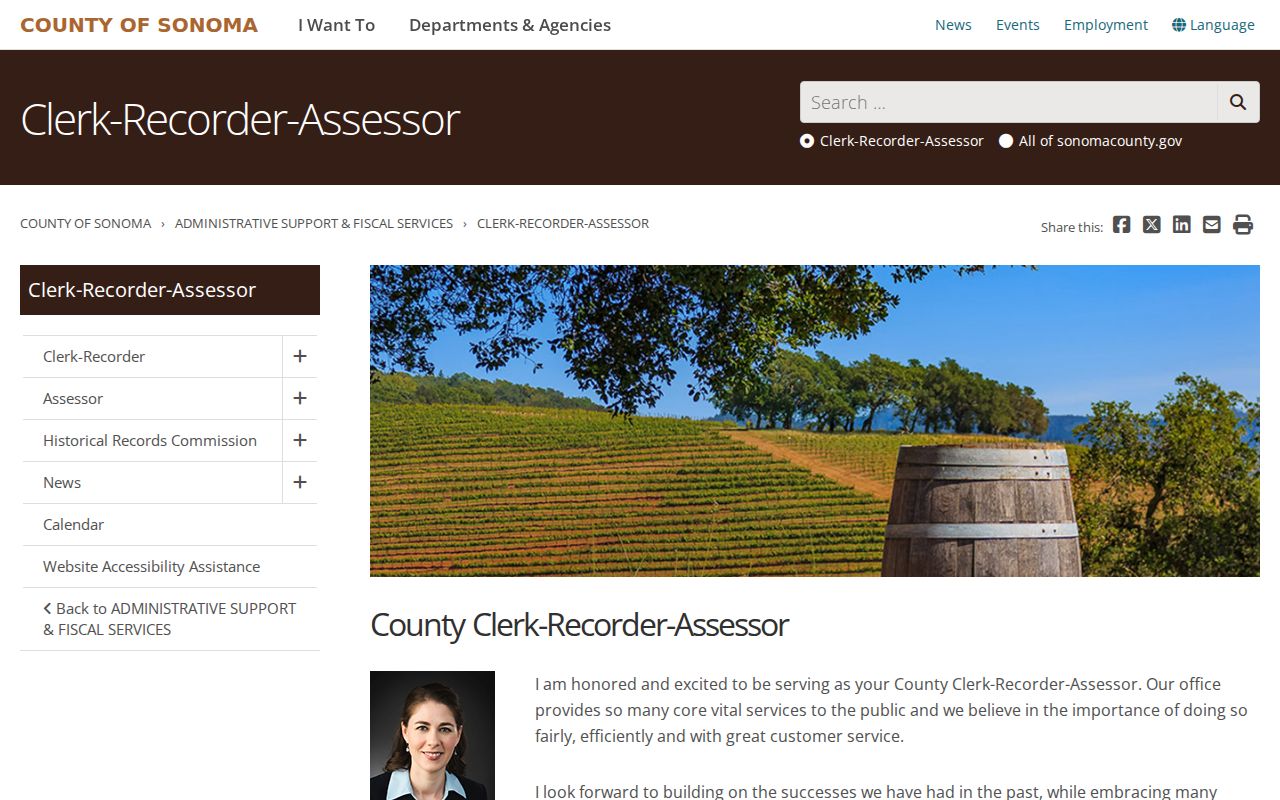
The image is a useful reminder that the campus is a routing point, not one combined resident roll. Follow the record to the division that created or keeps it.
Choose a Sonoma County Record
The same person can appear in several Sonoma County records under different roles. A grantor may sell land without living at the situs. A business agent may use an office address. A court party may be connected to a case but not to a current address. A directory head may be an occupant for the year printed, while an assessment name reflects a tax relationship. Search terms should follow the record's purpose, not the hope that every source will answer every question.
- Roll
- A custodian's organized list, such as an assessment or voter record, with rules about what may be viewed.
- Index
- A finding aid that points to a document, case, filing, or event; it is not always the underlying record.
- Parcel
- A mapped unit of land identified in Sonoma County by an APN and connected to a situs and legal description.
- Criss-cross directory
- A historical directory section arranged by street or address, often showing an occupant for a publication year.
For a family or estate question, use the source that can show relationships, such as a probate petition, obituary, vital index, or directory entry. For a property question, stabilize the parcel first. For a current status question, use the official self-service tool or ask the responsible office what lawful access remains. That order reduces same-name errors and keeps a residents directory search tied to evidence.
Start a Sonoma County Address Search
An address search should begin with the physical location, called the situs, and then move to the APN. The Sonoma County Property Information portal is parcel and APN oriented. The county's Parcel and Property Hub adds map context and nearby polygons. Together they give a stable land key before a deed, permit, or historical source is checked.
| Search control | What it contributes |
|---|---|
| Address or location | Starts with a situs; units and directional terms can matter. |
| APN | Uses Sonoma's three-part format, such as XXX-XXX-XXX; the ArcGIS field includes the hyphens. |
| Map click | Selects a parcel polygon and keeps adjacent parcels visible. |
| Layers and legend | Adds streets, places, buildings, city limits, county boundaries, and jurisdiction context where available. |
| Search, clear, identify | Supports map discovery; the underlying service also supports query and find tools. |
Keep the APN, situs, current document number, and legal description together. The map layer is general-reference geometry, not a survey. The APN is an assessment key, while a deed's lot, block, subdivision, or metes-and-bounds description identifies the land in legal terms. Those keys survive a mailing change better than a street line alone.
Sonoma County Parcel Map Limits
Sonoma's public parcel map is strong at locating land and weaker at naming every person connected to it. The public GIS description warns that owner-name attributes may be omitted from the Internet layer. It can still show an APN, parcel geometry, situs or property characteristics. The service is published monthly, draws from roughly 6,000 assessor map pages, and limits a query to 2,000 records. The map is a discovery tool, not a deed image or a survey-grade boundary.
California Revenue and Taxation Code section 408 also matters when assessor information is published. A fuller lawful roll channel may require the Assessor's office or counter, and the county directs questions about its information product to 707-565-1888. Do not turn an omitted name into a claim that no ownership record exists. Carry the APN and current document reference to the Recorder instead.
Mailing and situs addresses also split apart. A tax mailing line may be a post office box, a different Sonoma County address, an out-of-county address, or an agent's address. It can be useful evidence, but it does not prove who lives at the parcel. That distinction keeps the Sonoma County residents directory trail honest.
Current Sonoma County Resident Directories
Current sources act more like separate resident directories than one shared list. They answer different parts of a question and often require a second check. The table below separates a parcel lead, a recorded-document lead, a voter-status result, a court party, and a historical collection.
| Source | What it can show | Keeper | Access |
|---|---|---|---|
| Property Information / parcel roll | APN, situs, characteristics, values, and some lawful roll fields | Sonoma County Assessor | Public web fields, fuller office channel |
| Sonoma Web Service | Grantor, grantee, filing role, date, type, and document reference | Recorder Division | Free index; copies follow office rules |
| My Voter Status | An individual's registration status and election information | California Secretary of State | Authenticated personal lookup |
| Odyssey Case Portal | Case party, category, status, and register information where shown | Sonoma Superior Court | Remote rules vary by case type |
| Directories and local indexes | Historical occupants, households, businesses, or relationships | Sonoma County Library and partners | Digital scans, catalog, or on-site help |
Official rolls are usually more useful for a specific record question than a compiled resident directory. A commercial compilation may join mixed-age data, while the custodian can explain the date, field, and legal purpose behind a result. Compare the source, its update point, and its record key before relying on a name.
| Official source | Compiled result | Safer reading |
|---|---|---|
| Named custodian and record type | Mixed sources with unclear dates | Trace the claim to its originating office |
| APN, case, document, or filing reference | Person and address pairing without a stable key | Use a second independent anchor |
| Access limits stated by law | May flatten privacy and confidentiality rules | Stop when the custodian says a field is closed |
Sonoma County Court Party Searches
For a named party, the Sonoma Superior Court Odyssey Case Portal is the local starting point. California does not provide one open statewide party search for every superior court case. Odyssey's Smart Search accepts a case number or party or business name. Advanced filtering can narrow the category or location, but the available detail changes by case type. A public result may show a caption, case number, filing date, party role, status, register of actions, or hearing date. Remote display does not promise every document.
California Rules of Court rule 2.503 and case confidentiality rules limit what can appear online. Juvenile, sealed, protected, adoption, and many parentage records require a different path. Sonoma's Records Department also handles older civil, family, and probate material reaching into the mid-1800s. A pre-1984 file may need an archive request with a party name and year rather than a casual web search.
The Sonoma Superior Court records page shows the local records route that connects a person to a case category without making the result a full biography.
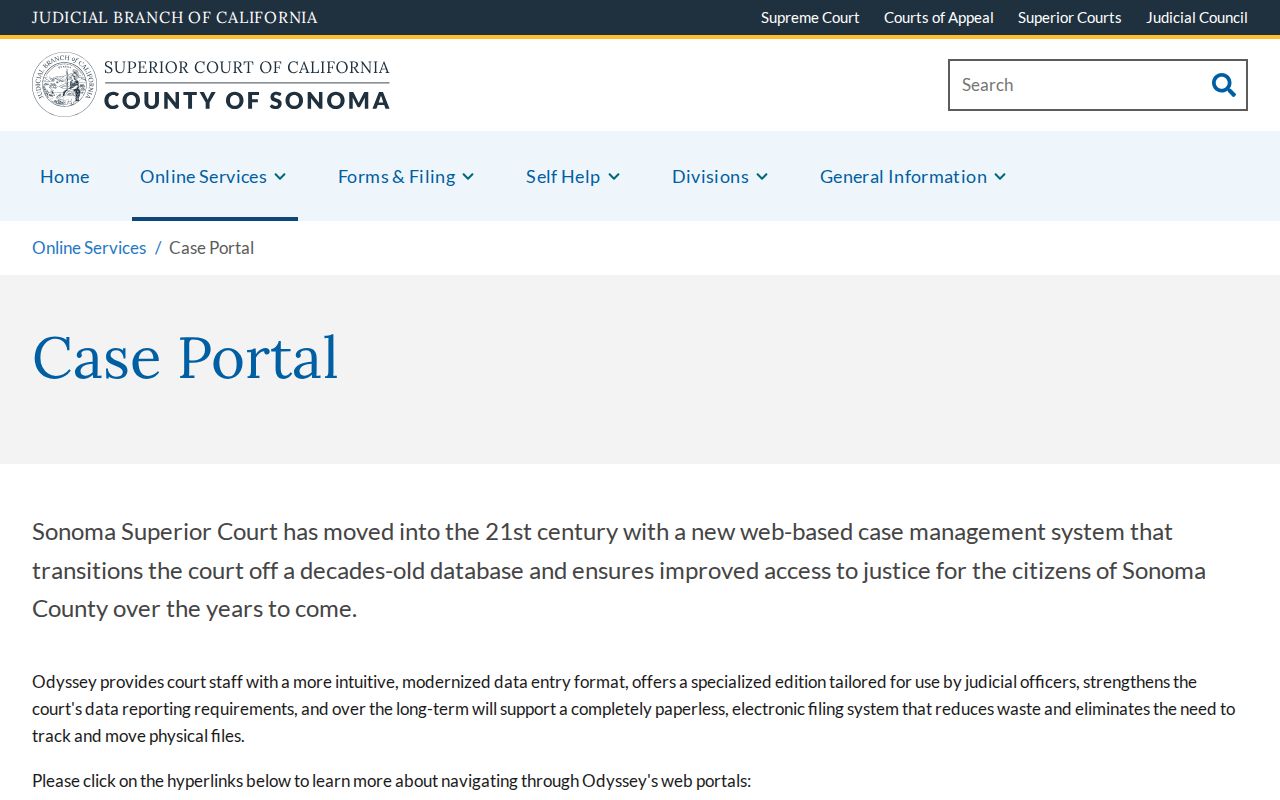
Use a case number and party role as the next anchor. The court record can confirm a legal proceeding, while a parcel, vital, or directory source must answer a separate identity or address question.
Sonoma County Voter Status Limits
California My Voter Status is a personalized verification tool, not a public by-name or by-street resident directory. It asks for identifying information such as first name, last name, date of birth, and, when required, a California driver license or identification number or the last four digits of a Social Security number. A Sonoma selection may return registration status, party preference, polling information, or election materials for the authenticated voter. It does not support typing a street and receiving a neighbor list.
Elections Code sections 2180 through 2194 govern voter information. The affidavit, signature, full birth date, driver's license or ID number, and Social Security number are protected. Qualified voter-file access has a permitted-purpose and use-limit framework, and Safe at Home or other protected voters may not appear in a block search. Participation history says whether a person voted, never how that person voted.
The California voter-status form illustrates why a personal lookup and a public resident directory are different tools.
For a Sonoma County voter-file question, contact the Registrar of Voters and state the lawful purpose, geography, and requested fields. A self-lookup should remain a self-lookup.
Sonoma County Vital Record Events
The Sonoma County Clerk-Recorder issues county birth, death, and marriage certificates, while California Department of Public Health provides a state ordering channel. Vital records establish an event or relationship, not a live address. Sonoma County birth coverage begins October 14, 1855. A new birth reaches the county about one month later, and the county cannot issue a certificate for an event in another county.
California separates authorized certified copies from informational copies under Health and Safety Code sections 103526 and 103526.5. A mailed authorized birth request needs a sworn statement with the required notarization. Confidential marriage records follow Family Code section 509. As of 2026, CDPH lists fees of $31 for birth, $26 for death, $19 for marriage, and $18 for dissolution, with search-fee and processing rules on the live state forms. A CDPH dissolution certificate is not the full court decree.
Historical birth, marriage, death, cemetery, obituary, probate, and directory indexes at the library can help with family history when a certified copy is not the right record. An event record should be paired with a date, place, and second source before it is used to identify a Sonoma County resident.
Sonoma County Business and License Trails
Business and license records can add a public role or affiliation to a resident directory search. California Secretary of State bizfile Business Search accepts an entity name or number, with contains or starts-with modes, entity type, status, and an initial filing date range. A result may show formation or registration date, status, agent, mailing address, and a Statement of Information due date. A Sonoma fictitious business name filing can connect a trade name to registrant names, a business address, expiration data, and a statement number.
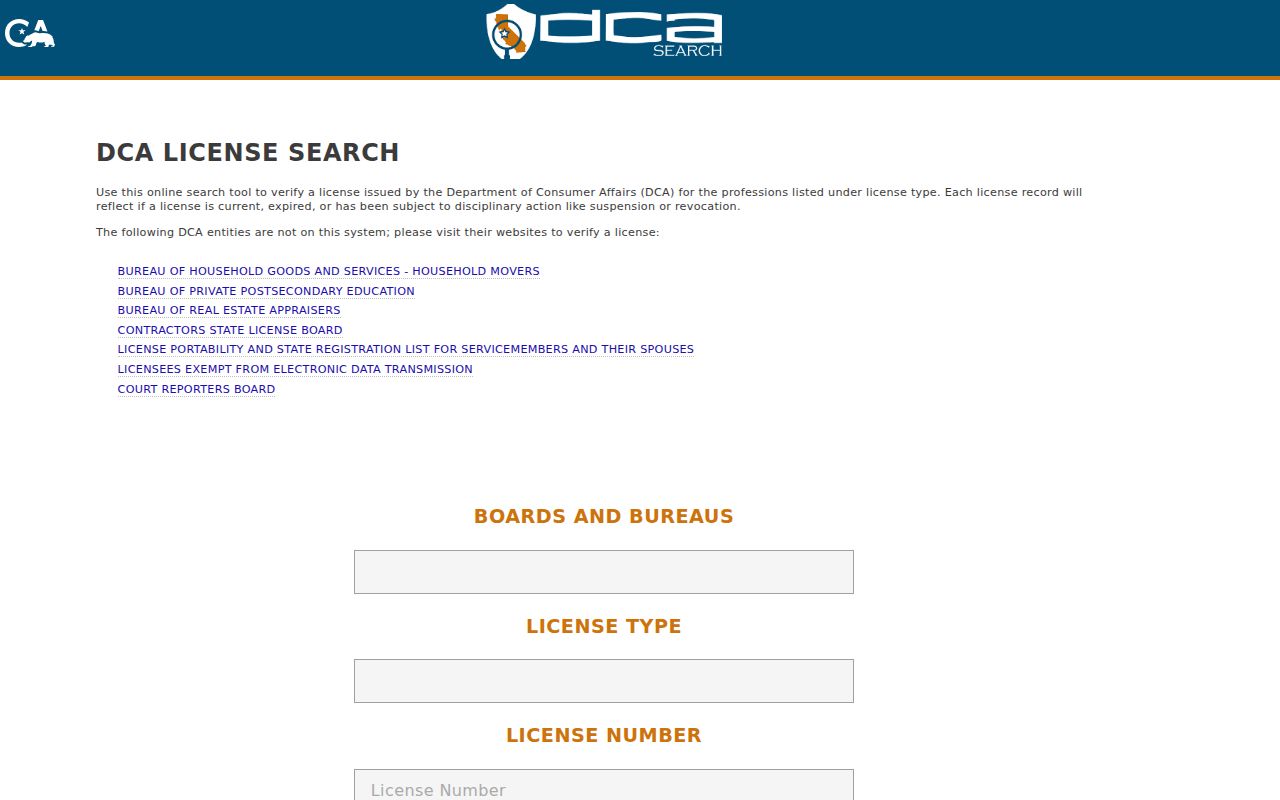
The California Department of Consumer Affairs license search adds board, license type, license number, business name, first name, last name, and location paths. A professional result may show status, issue or expiration data, and published discipline. A business, agent, practice, or licensed-premises address has a filing purpose. It is not proof that the person lives there.
California bizfile Business Search shows the entity side of a local records trail.
For a licensed professional, the state board is the custodian that can explain status fields and correction paths.
The California license-search portal is a separate source for credentials and public status.
Joining entity, FBN, license, and parcel references can clarify a public role, but each address must keep its original meaning.
Sonoma County Custody Lookups
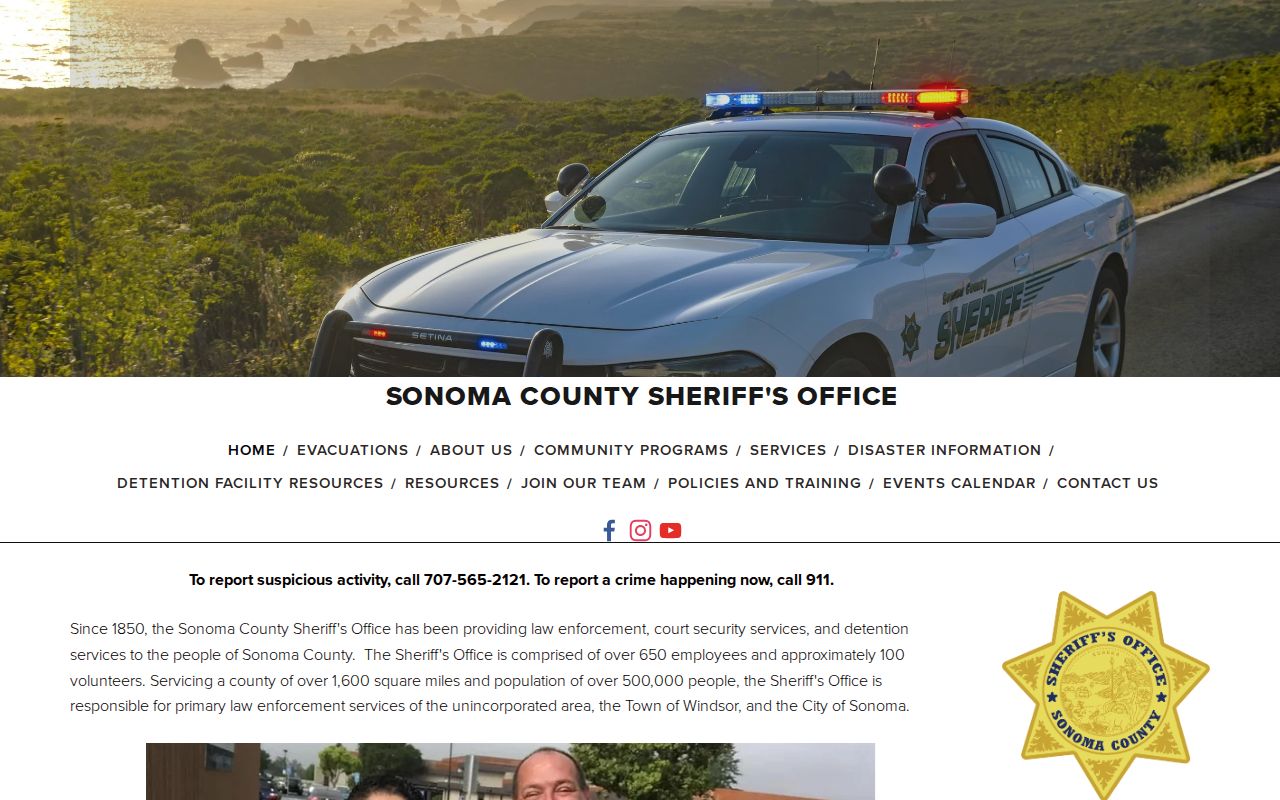
The Sonoma County Sheriff inmate search and the California state incarcerated-person search are narrow record sources, not a general Sonoma County residents directory. A custody result can describe a current booking or custody status under the agency's rules. It does not prove a current home, a past address, or an identity match outside the record. Incident, victim, juvenile, medical, investigative, and safety information may be withheld or redacted.
Use the agency that created the record for a report request. A California Public Records Act request asks for an identifiable existing record and does not require staff to build a new list. The same name can appear in a jail or court result without being the person sought, so the case number, date, and other public context still matter.
The Sonoma Sheriff inmate search screen is an example of a limited, agency-specific lookup.
A custody result belongs in a carefully labeled record trail, never as a shortcut to a claim about where someone lives.
Historical Sonoma County Resident Directories
Historical Sonoma County residents directory work is strongest in the local library collection. The Sonoma County Directories collection reaches from the 1870s into the early 1950s overall, with telephone, business, farmer, and excerpted city sections. Named volumes include the California State Farmers Directory for Sonoma County, 1922 to 1923, and a Petaluma, Cotati, and Penngrove A to Z directory for 1954 to 1955. A reverse section may turn an old address into an occupant, but it is tied to the publication year.
Printed runs vary by community and repository. A historical name can be paired with a census, newspaper, obituary, map, or probate index. Rural routes and localities may replace a modern numbered street. That is why a past resident trail needs the town or route, the edition year, and the volume's abbreviation key. The full collection and reading method are on the Sonoma County directory book page.
Sonoma County Library History Shelf
The Sonoma County History and Genealogy Library is a practical fallback when a web index stops. Its listed holdings include city and telephone directories, yearbooks, censuses, voter registrations, tax assessments, cemetery guides, and indexes to births, marriages, deaths, wills, probate, court, and naturalization records. Digital access varies by collection and authentication. Archive records marked Offsite should be requested before a visit.
The local history layer is useful for reconnecting with a former classmate, tracing an heir, or documenting a family house. Library staff can help separate an OCR miss from a missing volume. The County Archives are managed through the library, and historical societies, the Petaluma History Room, and the Sonoma County Wine Library add family, business, and community material. These are named collections, not open rosters of living members.
Use the library when the residents directory question has become a family-history or old-address question, then return to the custodian for a current record.
Sonoma County Records Through Time
Sonoma County's records history explains why a search can have a gap without having no answer. The county was one of California's original 27 counties in 1850, yet the Historical Records Commission's Recorder inventory reaches to 1834 for earlier land-era material. The county seat moved from Sonoma toward Santa Rosa in 1854, so early records may be cataloged under older place names even though today's counter and archives are in Santa Rosa.
- 1834: the Recorder inventory begins its historical roadmap before statehood.
- 1850s: county administration and early census and land records form the first American-era layer.
- 1906: the Santa Rosa earthquake damaged the courthouse, but it is unsafe to say all county records burned.
- 1965 and 1967: the library's archival mandate and California Room helped shape today's local-history service.
- Modern access: electronic indexes, scans, counter books, microfilm, and archives now overlap.
The result is a layered Sonoma County residents directory, not a clean paper-to-web switch. A missing online hit should prompt a custodian, library, archive, or records request check rather than a conclusion that the person or parcel never appears.
Sonoma County Privacy Boundaries
California privacy rules create lawful stopping points. Safe at Home can substitute a mailing address for eligible protected participants. Elections Code section 2194 restricts voter data use and republication. The Driver's Privacy Protection Act closes general DMV address access. A court, vital, juvenile, adoption, medical, or investigative record may also have a specific confidentiality rule. A Sonoma County residents directory should say what a source proves and leave closed fields closed.
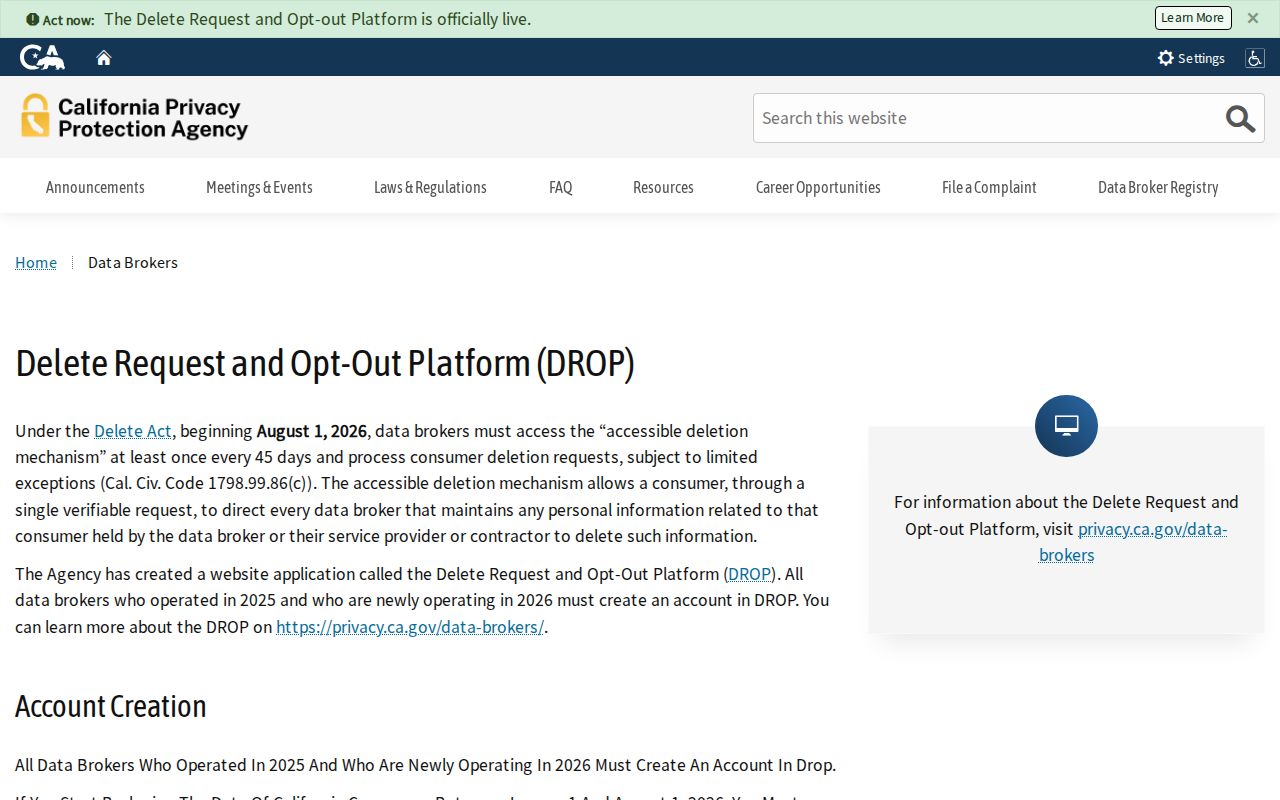
California's CCPA, as amended by the CPRA, gives covered residents rights to know, delete, correct, opt out of sale or sharing, limit sensitive-information use, and receive nondiscriminatory treatment, subject to exceptions. The California Privacy Protection Agency's data-broker information explains the DROP process. A verified deletion request for registered brokers began in January 2026, and broker retrieval at least every 45 days begins August 1, 2026. Deleting a broker copy does not delete a deed, assessment, court file, or archive record.
California's data-broker privacy portal shows the difference between a private copy and the public record held by a custodian.
Use public records for family history, civic understanding, property curiosity, or a lawful personal need. Do not use a name or address to stalk, harass, intimidate, or harm anyone.
Lawful use. A public record is not permission for surveillance or repeated unwanted contact. California Penal Code sections 646.9, 422, and 653m, along with civil harassment law, set serious limits on misuse.