
Sonoma County Neighbor Records
A block search is a comparison of sources with different custodians. The parcel viewer supplies shape and APN. The Assessor channel may supply lawful public roll fields. Deeds show title parties. Permit Sonoma shows public project history for unincorporated parcels. Historical reverse directories can show dated occupants, while voter data and community groups have narrower rules. None of these sources is a complete current neighbor list.
| Source | What It Shows About a Block | Access |
|---|---|---|
| County parcel viewer | Target and touching or nearby parcel polygons, APNs, streets, and jurisdiction context | Free map browse; owner name may be omitted |
| Assessor roll channel | Public parcel ownership, assessment, and mailing fields allowed by law | Property system or counter; mailing is not occupancy |
| Permit Sonoma | Address or APN projects and enforcement records | County search mainly for unincorporated parcels; city systems separate |
| Recorded deeds | Title parties and instruments for parcels on the block | Recorder index, with 1964 online workflow and earlier counter books |
| Voter file | Geographic voter fields only for a qualified permitted request | No casual public block list; protected records stay closed |
| Historical reverse directory | Dated occupant or head-of-household clues at numbered addresses | Library or digital volume; gaps and renumbering matter |
| Community association | Public officers, meetings, or contact routes when published | Membership rosters are not presumptively public |
An owner is not every occupant. A mailing address can sit outside the parcel. A public officer contact is not a membership roster. The useful block note names the parcel, source, date, and role instead of saying that a map polygon proves a household.
Sonoma County Parcel Neighbor Map
Use the Sonoma County Property Hub to turn one known address into a parcel and APN. Zoom until parcel lines draw, select the target polygon, and keep a note of its APN. Then click each touching polygon clockwise. The method creates an adjacency inventory, not a resident inventory.
- Search the known address or locate it by map, then confirm the target polygon and APN.
- Pan and zoom until the surrounding parcel lines are clear; retain the map context and street labels.
- Click adjacent polygons clockwise and record each APN, situs clue, and whether the lot is vacant, corner, or irregular.
- Carry each APN into the lawful Assessor, Recorder, and permit channels rather than guessing names from house numbers.
- Check city limits, county layers, and the municipal advisory body before assigning the block to an office or civic group.
The public GIS layer is published monthly, may omit owner-name attributes, and supplies general-reference geometry rather than survey-quality boundaries. The service supports spatial queries but has a 2,000-record maximum per query. Narrow the map before looking at a block or buffer. A polygon can be next to another polygon without revealing who occupies either one.
Sonoma County Block Record Chain
Once APNs are recorded, move one parcel at a time. Use the property roll for current parcel characteristics and lawful public fields. Use the Recorder index for a title party or document reference, then read the legal description. Use Permit Sonoma for public project and enforcement history, leaving Start Date blank when the loaded search needs more than its default recent range. For a parcel inside an incorporated city, use the city permit system instead.
The chain is address -> Property Hub parcel -> APN -> roll or counter -> Recorder instrument -> permit history -> city-limit or advisory-body check. It is not a chain from one person to a presumed household. Deeds, permits, and assessment records answer land or filing questions. Historical reverse directories can add an occupant snapshot for a specific publication year, but coverage is not continuous.
For the full named-street record trail, the Sonoma County street directory method carries an address through parcels, deeds, permits, and historical sources. The block method here stops at immediate adjacency and the civic layer.
Sonoma County Voter Block Limits
California My Voter Status is an authenticated check for the voter, not a public by-name or by-street neighbor search. A qualified voter-file recipient may receive geographic fields only for a permitted statutory purpose. Elections Code section 2194 protects affidavits, signatures, driver license or identification numbers, Social Security numbers, and specified address or contact data. Participation history says whether a person voted, not the ballot choice.
Safe at Home and other protected registration rules can remove an eligible participant from an ordinary block view. A substitute mailing address should not be mapped as the participant's home. A blank voter result therefore has no simple meaning. It may reflect authentication, eligibility, confidentiality, list maintenance, or the fact that the public tool was never a reverse-address directory.
The block record should stop at the permitted field. Do not copy a qualified file into a casual neighbor list, republish it online, or infer a household from one voter entry. A separate California Megan's Law registry has its own search scope and use warnings; it is not a general neighbor index.
Sonoma County Community Contacts
Sonoma County has several civic layers rather than one neighborhood directory. County Municipal Advisory Councils serve areas such as Sonoma Valley, Lower Russian River, Springs, North Sonoma Valley and Mark West, and coastal or rural communities as constituted at a given date. Santa Rosa has neighborhood and Community Advisory Board channels. Petaluma and Sonoma have their own neighborhood groups. Use the county's current community engagement page for public rosters, meeting notices, and contact routes.
| Civic layer | Sonoma County examples | What a public contact can show |
|---|---|---|
| Municipal Advisory Councils | Sonoma Valley, Lower Russian River, Springs, North Sonoma Valley and Mark West, plus coastal or rural areas | Meeting notices, appointed contacts, agendas, and public issues |
| City neighborhood channels | Santa Rosa neighborhood and Community Advisory Board channels; Petaluma and Sonoma groups | Published meetings, officers, or a consensual contact route |
| Private associations | Homeowner associations, neighborhood watches, clubs, and congregations | Only a published or invited contact; membership is not presumed public |
These organizations publish public contacts, appointed members, agendas, or meeting material when they choose. They do not create a complete list of households on a block. Homeowner associations are private corporations or associations. A Secretary of State or fictitious business name filing may identify an agent, but a membership list is not presumptively public. Congregation, club, neighborhood-watch, and school rosters should be treated as consensual or private unless the group publishes a contact.
For a human use question, a public meeting contact can help someone learn about a neighborhood issue or reconnect through a group that invites contact. It should never be used to infer that every parcel owner belongs to the group.
Sonoma County Postal Neighborhoods
Postal place names and municipal boundaries cross in Sonoma County. A Santa Rosa mailing line can be outside Santa Rosa city limits, so Permit Sonoma may hold the permit or code record. ZIP 95472 reaches beyond Sebastopol, 95476 covers the City of Sonoma and broad unincorporated Sonoma Valley, and 94928 extends beyond Rohnert Park. The same mismatch appears around Petaluma, Healdsburg, Cloverdale, Windsor, and the Russian River.
Before calling an address part of a city neighborhood, overlay city limits and county context. Postal identity answers where mail is routed. Situs answers where the parcel sits. The APN answers which assessment land unit is involved. A civic body, permit office, police agency, and school or fire district can each use a different boundary.
This is a Sonoma County geography insight worth carrying into any neighbors lookup: six polygons do not equal six households, and one postal place does not equal one municipal community.
Sonoma County Official And Compiled Records
Official records and commercial compilation products can both display names or address clues, but they are not the same category. The official source has a custodian, record type, date, and access rule. A compilation may combine mixed-age public and licensed data, merge similar names, and retain stale addresses. It is not an authoritative block roll. Compare the category before relying on a result.
| Category | Strength | Limit |
|---|---|---|
| Official parcel or roll | APN, situs, assessment, and lawful public fields tied to a custodian | Owner is not every occupant; public GIS may omit names |
| Official deed or permit | Recorded party, instrument, project, date, or parcel reference | Filing role does not prove a person's home or current presence |
| Historical directory | Dated occupant or head-of-household clue with locality context | Edition gaps, OCR errors, route terms, and scope limits |
| Commercial compilation | May gather mixed public and licensed clues in one interface | Stale or merged data, unclear source dates, and no official block custody |
A record-supported block note should prefer the official source and then use a historical or community source for context. If the facts conflict, keep both dates and roles visible instead of selecting the more convenient name.
Sonoma County Safety And Privacy
Law enforcement and confidentiality resources are part of a responsible neighbor search, not a shortcut to a resident list. The Sonoma County Sheriff is the local channel for non-emergency fraud or safety concerns in its jurisdiction. For an immediate threat, use emergency services. Do not confront a person because a parcel, deed, or compilation record produced a name. For a property-recording concern, the county's Fraud Notify service is a notice channel, not proof that a filing is fraudulent.
The Sonoma County Sheriff source is the proper public safety starting point for local contact information.
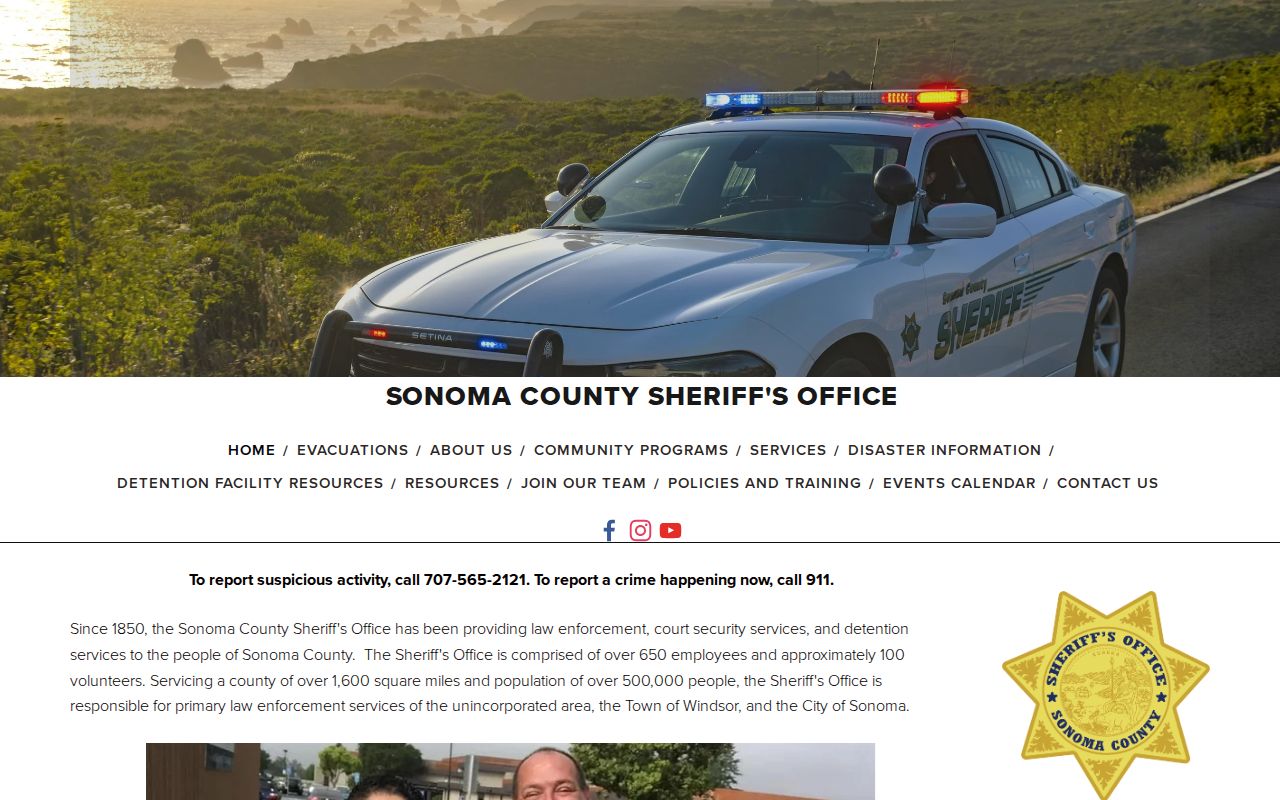
A safety concern belongs with the appropriate agency, while a parcel map remains a land record and not a reason to approach a household.
California Secretary of State Safe at Home provides address confidentiality and mail forwarding for eligible participants, including survivors of domestic violence, stalking, sexual assault, child abduction, elder or dependent-adult abuse, and human trafficking. Government Code sections 6205-6211 and 6208.1 protect substitute-address participants and prohibit harmful public display. A protected address is a lawful stopping point.
The Safe at Home program explains the confidentiality channel that can make a neighbor lookup intentionally incomplete.
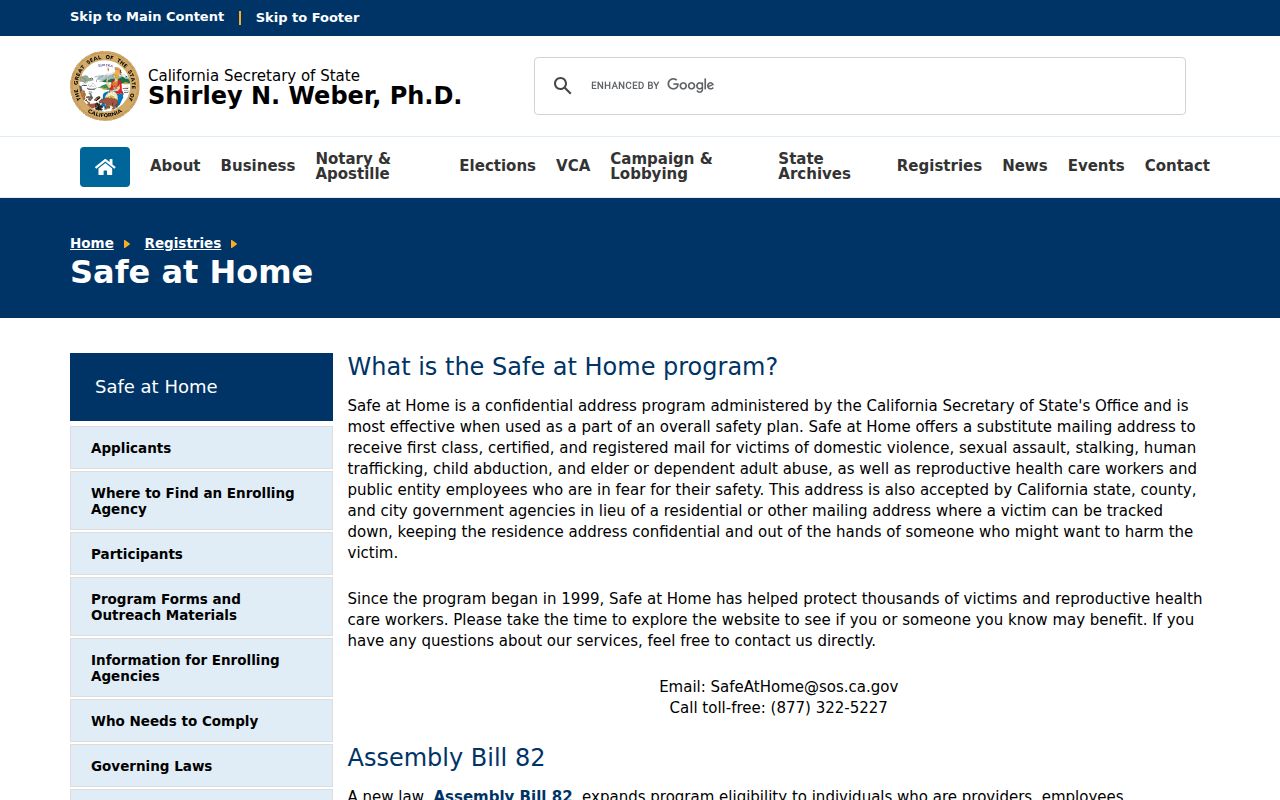
Privacy protection is a record feature, not evidence that a person is absent from the block.
Legal Limits On Sonoma County Neighbors
A Sonoma County neighbors lookup is strongest when it answers a narrow block or property question and names the source. It should not expose protected addresses, private association rosters, utility or delivery customers, juvenile or victim information, or household members who are not in a lawful published source. Owner, occupant, mailing address, and postal city remain distinct.
Lawful personal use. Neighbor research is appropriate for civic curiosity, personal safety awareness, family history, and consensual community contact. California Penal Code sections 646.9, 422, and 653m and Code of Civil Procedure section 527.6 address stalking, threats, repeated harassing contact, and conduct with no legitimate purpose. Do not use a neighbor lookup to stalk, harass, intimidate, or harm anyone.
Stop when the next fact would require a protected field, a private roster, or an unsupported inference. A careful block record can still show parcel geometry, title references, public work, civic contacts, and dated history without pretending to identify every person nearby.